
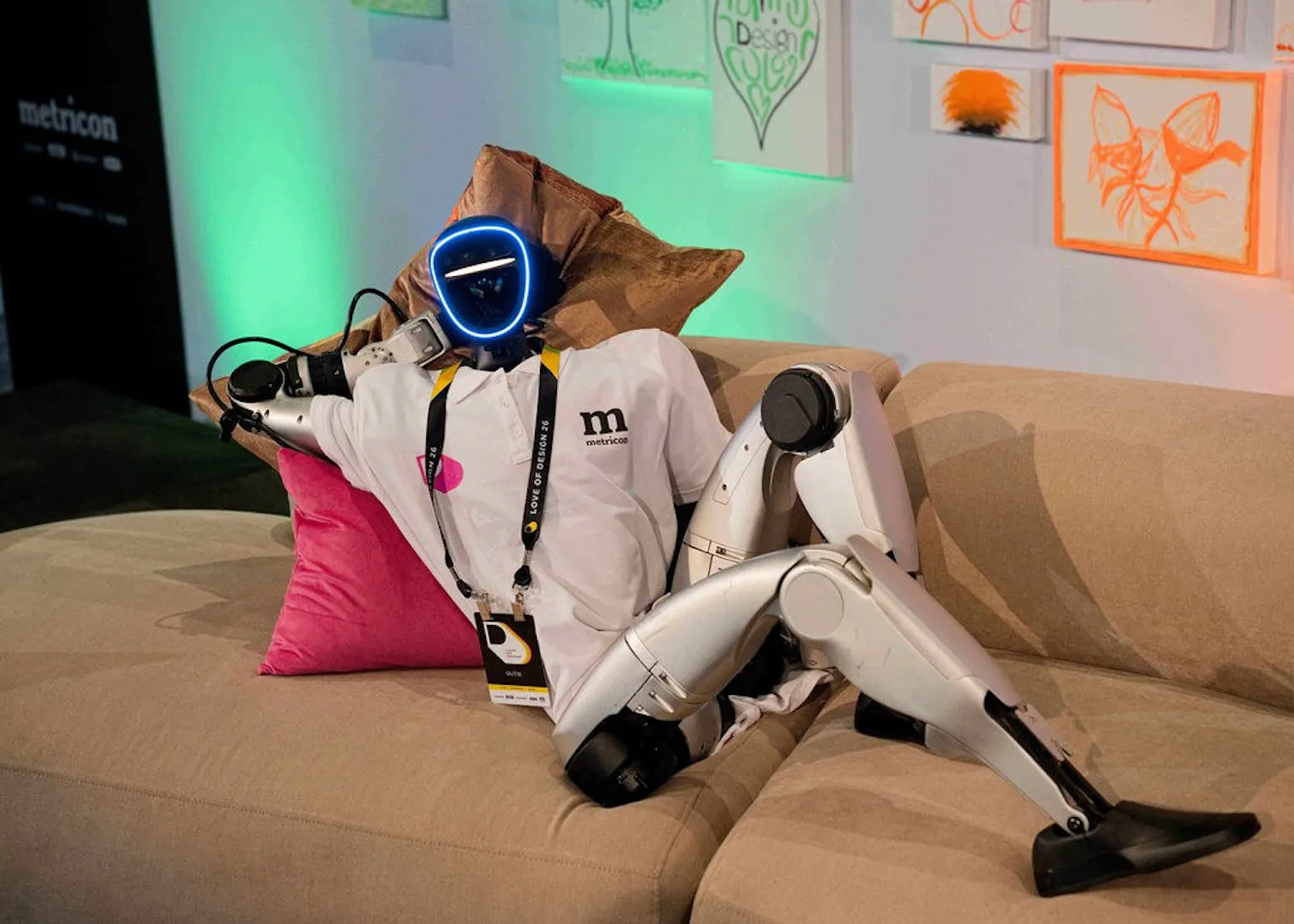
One of the biggest talking points at Metricon's Love of Design Summit wasn't an architect, designer or sustainability expert.
It was a humanoid robot.
Brought in as part of Associate Professor Müge Teixeira's session from the Queensland Univeristy of Technology, the robot, aptly named QUTie, gave attendees a glimpse into a future that suddenly felt a little closer than expected.
For a moment, it felt like something straight out of a sci-fi movie. Then the conversation took an interesting turn.
Rather than focusing on the robot itself, Müge encouraged attendees to think about what happens when technology quietly becomes part of everyday life. Because history suggests that whenever the way we live changes, our homes tend to change with it.
It's already happened more times than we probably realise.
One of the more interesting examples came from Futurist Katie Rigg-Smith, who pointed out that laundries weren't always part of the Australian home. A century ago, washing clothes often meant heading outside to a wash house or utility area. Then washing machines arrived, floorplans evolved and before long, the humble laundry became a non-negotiable.
The same thing happened with garages, home offices and media rooms. Each arrived because our lifestyles evolved.
The question posed at the summit was simple: what spaces might tomorrow's homes require?
Across four days in Byron Bay, architects, researchers, sustainability leaders and designers explored the ideas, materials and technologies shaping the future of housing.
Some felt futuristic, others are already finding their way into homes today, but all offered an interesting glimpse into where Australian housing could be headed next.
1. Homes have always evolved
It's easy to think of innovation as something dramatic: a breakthrough, a world-first, a headline-grabbing announcement.
More often, it arrives quietly. One device becomes ten. Ten becomes twenty. Before long, we stop noticing it altogether.
Today, the average Australian home contains around 24 connected devices. By 2030, that number is expected to climb to roughly 44. From appliances and lighting to entertainment, security and energy management, technology is becoming increasingly woven into everyday life.
The discussion around humanoid robots was fascinating for the same reason. Not because everyone expects a robot helper to move into their home next year, but because it challenged attendees to think about what happens if they eventually do become commonplace.
Would homes need dedicated spaces for them in the same way we eventually made room for washing machines and cars?
It sounds a little far-fetched until you remember how many things in today's homes would have seemed equally far-fetched a century ago.
The floorplans we know today aren't permanent, but simply a reflection of how Australians live right now.
2. The way we design homes is changing too
Of course, technology isn't only changing what goes into our homes. It's also changing the way they're imagined, designed and experienced long before construction begins.
For anyone who's ever stared at a floorplan and struggled to picture what the finished home will actually feel like, that's a pretty exciting prospect.
Throughout the summit, conversations explored everything from AI and digital fabrication through to immersive virtual and augmented reality experiences. While some of the technology sounds futuristic, much of it is already finding practical applications in the design process today.
For homeowners, it could mean exploring a home in greater detail before making decisions and gaining a clearer understanding of how a space will work for their lifestyle. For designers, it opens up new ways to test ideas, solve problems and refine concepts before a shovel ever hits the ground.
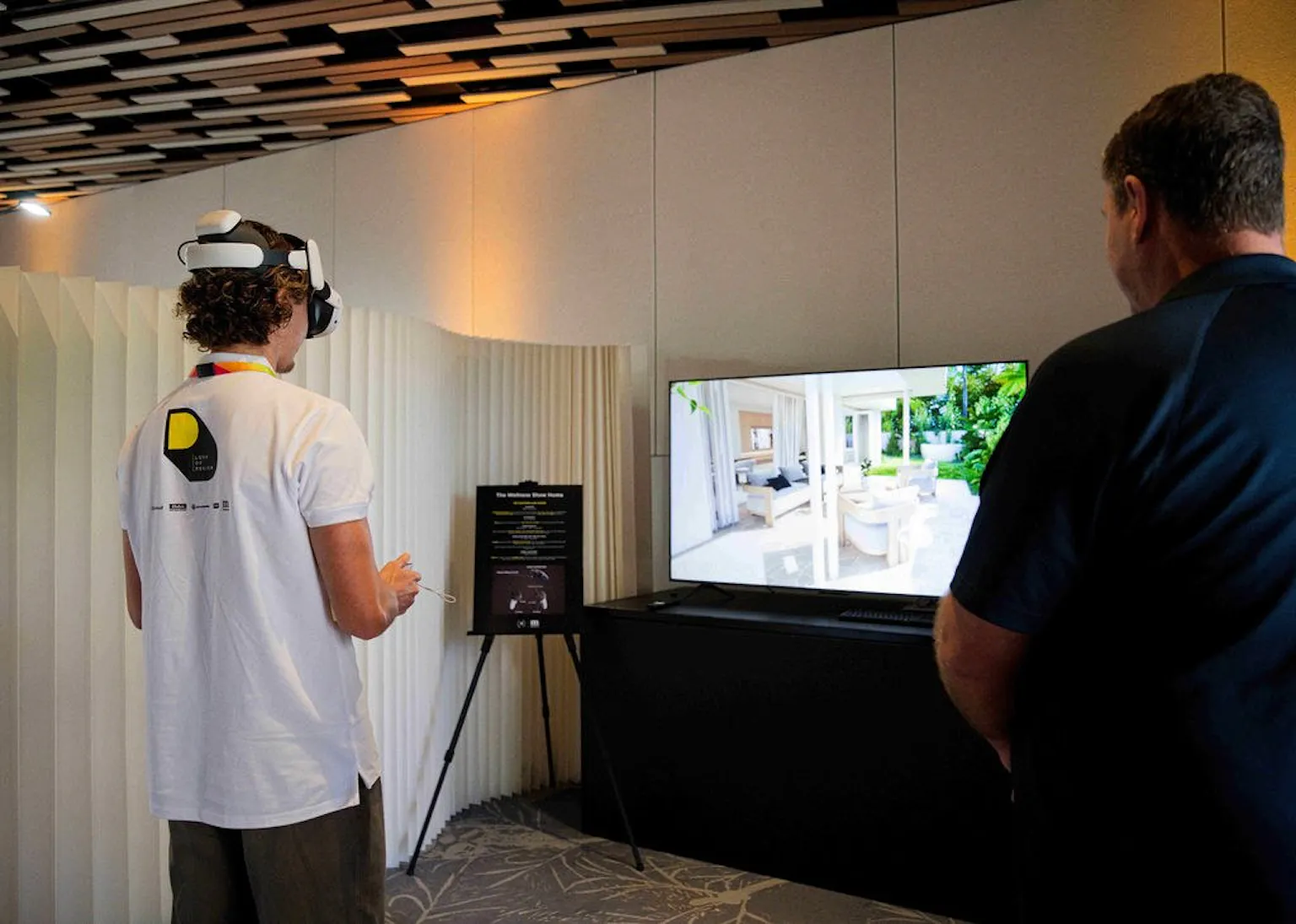
Metricon's design team experienced this firsthand during the summit, stepping inside a virtual version of Metricon's new Wellness Home, that will commence construction soon. Through VR technology, attendees could wander through the spaces, interact with objects, explore the home's design features and even take a virtual dip in the pool.
The technology itself is impressive. But the real opportunity isn't the headset or the software. It's helping people feel more confident about one of the biggest decisions they'll ever make.
3. Robots might help build homes before they live in them
While humanoid robots might still feel like a glimpse into the future, many of the technologies reshaping housing are already quietly making themselves at home.
Take modular and prefabricated construction.
Not all that long ago, these approaches sat on the fringes of the housing conversation. Today, they're being embraced across commercial and residential construction. Building components in controlled factory environments can improve consistency, reduce waste and help tackle some of the workforce challenges facing the industry, particularly in regional areas.
It's also where conversations around robotics start to become a lot more real.
Müge's work explores how collaborative robotics could support the way building components are manufactured in the future.
Before anyone starts imagining robot tradies taking over construction sites, that's not really the point. The more likely scenario is technology helping with repetitive, physically demanding or highly precise tasks, while people continue to do what people do best: problem solve, adapt and bring experience to the process.
In many ways, it's a story we've seen play out across manufacturing, transport and countless other industries. Housing is simply joining the party.
4. Innovation doesn't always come with a screen
For all the discussion around robotics, artificial intelligence and emerging technology, some of the most interesting conversations at the summit centred on something far more tangible: the materials homes are built from.
Michael Leung from Balanced Earth Architects offered a refreshing reminder that innovation doesn't always arrive with an app, a charging cable or a software update.
Sometimes it arrives in the form of a wall.
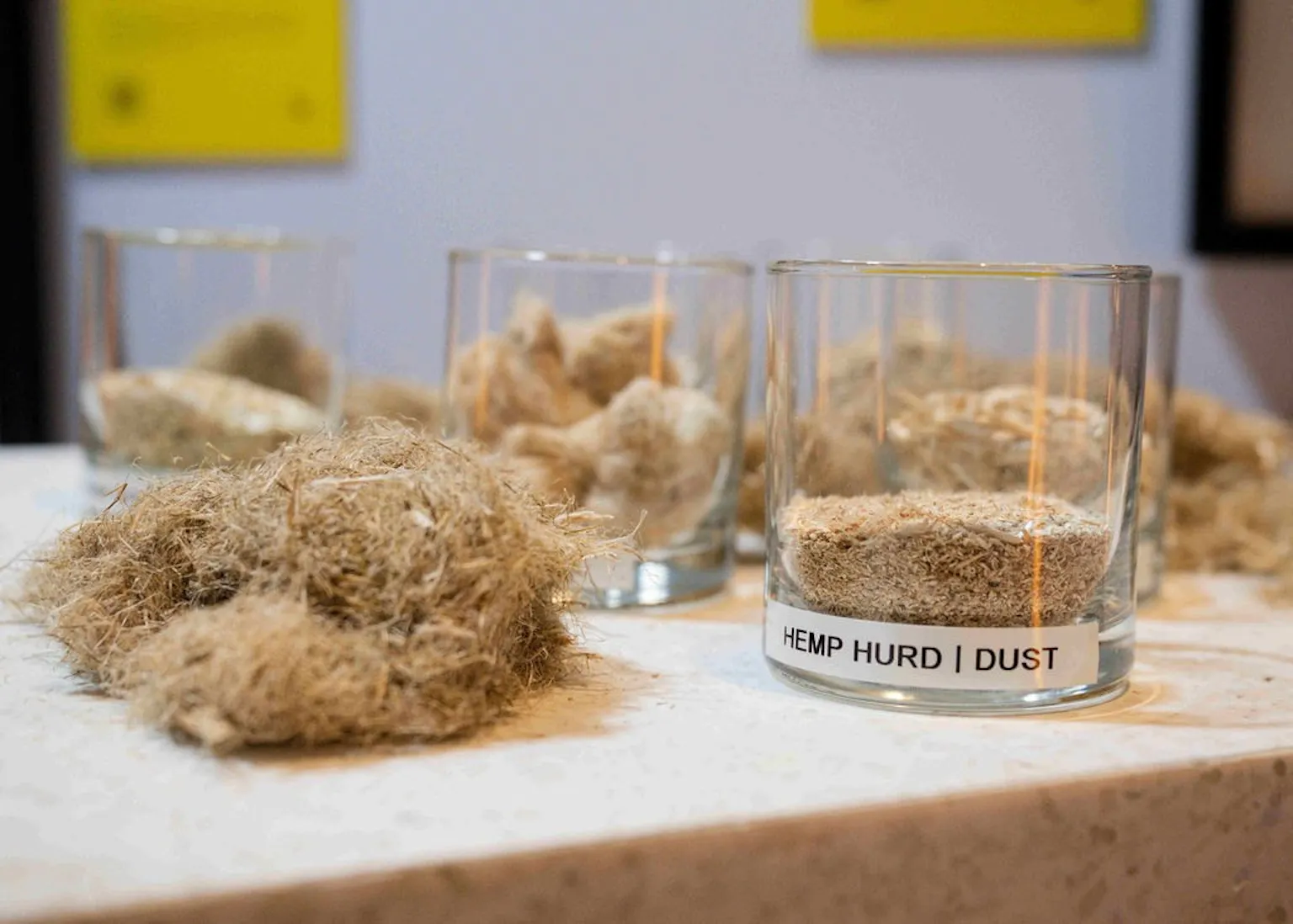
Materials like hempcrete formed part of that conversation. Made from hemp hurd, lime and water, it's attracting growing attention for its thermal performance, acoustic qualities and environmental credentials. Michael also spoke about its ability to sequester carbon, making it part of a broader conversation around how homes can reduce their impact long before someone moves in.
Whether every Australian is building with hempcrete in ten years is almost beside the point. The more interesting shift is the growing curiosity around the materials themselves. Where do they come from? How do they perform? What do they contribute to the experience of living in a home?
For years, these conversations largely stayed within architecture circles. Now they're starting to pop up everywhere from industry events to display homes and dinner tables.
5. We spend most of our lives indoors. Shouldn't we talk about that more?
One of the biggest lightbulb moments from the summit came from an idea that was almost ridiculously simple.
Australians spend most of their lives indoors. It's hardly breaking news, but it does make you stop for a second.
We spend plenty of time talking about kitchens, facades and whether brushed nickel is having a moment. Far less time talking about the environment we're actually spending most of our lives in.
How much natural light enters a room? Does fresh air move through the home easily? How does it feel on a 38-degree day in February?
Throughout the summit, conversations around wellbeing kept surfacing in different forms. Michael Leung's presentation explored everything from passive design and indoor air quality through to low-toxicity materials and thermal comfort, all centred around a fairly simple idea: homes should make daily life feel better.
The funny thing is that the best examples are often the least noticeable. Nobody walks into a home and says, "Wow, incredible moisture management." But they do notice when a home feels calm, comfortable and easy to live in.
That's where some of the most meaningful innovation is happening.
So what does all of this mean?
Over four days in Byron Bay, the conversation bounced between humanoid robots, artificial intelligence, modular construction, hempcrete walls and the future of Australian housing.
It's not exactly the line-up you'd expect to find in the same room. But beneath every discussion was the same underlying idea: homes are constantly evolving.
Some of the concepts explored at Metricon's Love of Design Summit are already finding their way into homes today. Others still feel a little like science fiction, but that's the best part. The value of conversations like these isn't in predicting exactly what Australian homes will look like in twenty years' time. It's in staying curious about the ideas, technologies and materials that could shape how Australians live next.
For Metricon's design team, the summit offered a chance to step outside the day-to-day, hear different perspectives and explore how changing technologies, materials and lifestyles might influence the homes of tomorrow.
The dedicated laundry was once a new idea. So was the garage. So was the home office. Which is perhaps the best reminder that the future rarely arrives all at once. Most of the time, it sneaks in quietly, becomes part of everyday life and before long, we can't imagine living without it.
Who's to say a robot room won't be next?

